- Porsche sales will fall 15 percent compared to 2025.
- The company only sold 60,991 units worldwide between January and March.
- Sales continue to decline in key markets such as China and North America.
Porsche is off to a slow start in 2026. In the first quarter, the sports car maker delivered 60,991 vehicles worldwide—down 15 percent from the same period last year.
Much of the decline was due to weak demand in China and North America, particularly for the company’s electric vehicles. At the same time, Porsche was facing several self-inflicted challenges, including questionable strategic decisions.
Entry Level Gaps

Photo by: Porsche
Some brand problems start at the bottom line. Production of the Boxster and Cayman has ended, while the electric replacement has been postponed. The new platform—also intended for Audi models—has been pushed back, leaving Porsche without a gas- or electric-powered option in this segment. The gap hurts the company’s valuable sales.
There are also signs of tension in Porsche’s EV strategy. Under the leadership of former CEO Oliver Blume, the company pushed aggressively toward electrification without fully securing the transition. Chief Sales Officer Matthias Becker said overall deliveries met expectations, but pointed to the upcoming all-electric Cayenne as an important focus. The SUV is expected to help drive demand starting this summer.
Weakening Demand in China
China remains Porsche’s biggest concern. Deliveries there fell 21 percent to just 7,519 vehicles. The company noted signs of buyer hesitancy and deliberately avoided deep discounts. In a market characterized by fierce price competition, the strategy puts Porsche at a disadvantage, as local brands gain the upper hand with more affordable and increasingly competitive models.
The situation is very bad for the Taycan. Porsche’s first electric sports sedan has almost disappeared from the Chinese market, with fewer than 50 units registered in January and February combined.
Pressure In North America & Europe
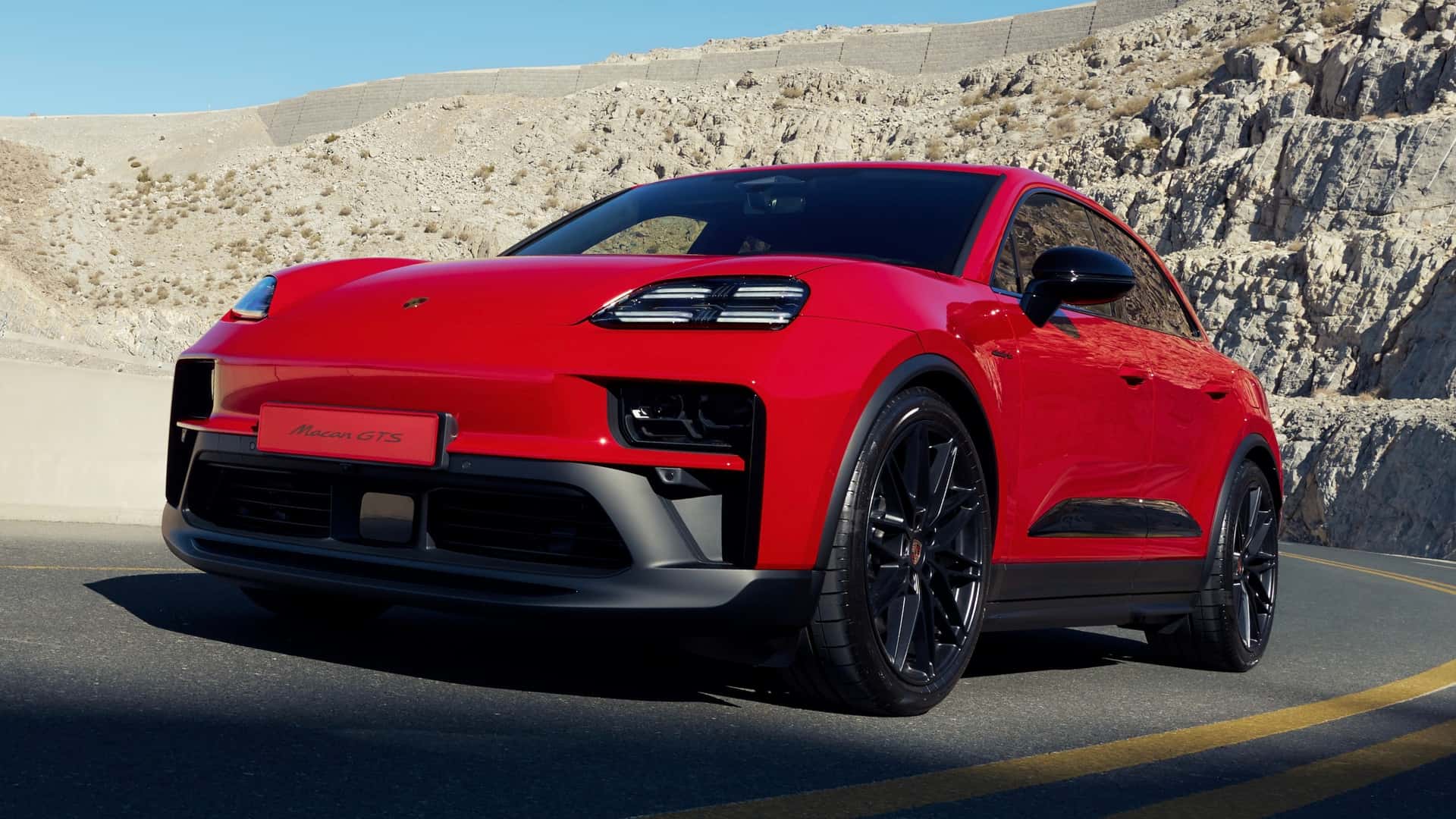
Porsche Macan GTS Electric
Photo by: Porsche
North America performed better than China, but still experienced declines. Porsche delivered 18,344 vehicles in the region from January to March, down 11 percent. Profitability is also under pressure due to high US tariffs, as all models are imported from Europe. Without local production, these costs will continue to squeeze margins.
In Europe, other strategic decisions also weighed on performance. Porsche has opted not to update the petrol-powered Macan to meet current EU emissions standards, and plans to switch completely to an electric version. As a result, combustion models are no longer available in the EU—although demand remains.
Globally, Porsche delivered 18,209 Macans in the first quarter, including 10,130 gas-powered units. The conventional version will remain available in markets outside the EU during the summer.
Tigers Decline, While 911 Remains Strong
Macan’s total sales fell 23 percent. Porsche attributed this to the shift to electric models, the end of US tax incentives for electric and hybrid vehicles, and generally weakening demand for electric vehicles. Together, regulatory pressures and a cooling EV market are having a devastating impact on SUVs.
Among individual models, the Cayenne remains Porsche’s best-selling car with 19,183 deliveries, although that figure fell 4 percent year-on-year. The all-electric version is expected to be rolled out in stages starting this summer. Meanwhile, the iconic 911 continued to perform well, with sales increasing 22 percent to 13,889 units—helping stabilize the business in a challenging environment.
Financial Performance Takes a Hit
Photo by: Porsche
Even more concerning than the drop in shipping is the financial impact. Profit after tax fell to €310 million last year, a sharp 91.4 percent drop from nearly €3.6 billion in 2024. Revenue also fell about 10 percent to €36.3 billion.
Porsche said it was now reviewing its electrification strategy after realizing that its initial electric vehicle targets were too ambitious. The company is undergoing a broader course correction that will likely involve revisiting key product decisions.
Motorcycle Pickup1: Porsche sales continue to decline as the company hopes to bounce back after a tumultuous 2025. With new products on the horizon—like the upcoming Cayenne EV—the company sees things turning around in the next few months.