The value of GM stock was stable during the week of March 30th, 2026 to April 3rd, 2026. Shares closed at $72.54 per share, representing a decrease of $0.44 per share, or a negligible 0.60 percent, compared to the previous week’s closing value of $72.98 per share.

GM Stock Values – March 30, 2026 – April 3, 2026
| Date | Open | Close/Last | High | Low |
|---|---|---|---|---|
| 4/3/2026 | $73.34 | $72.54 | $73.68 | $71.67 |
| 4/2/2026 | $73.34 | $72.54 | $73.68 | $71.67 |
| 4/1/2026 | $75.20 | $75.04 | $75.87 | $74.72 |
| 3/31/2026 | $74.05 | $74.50 | $75.09 | $73.41 |
| 3/30/2026 | $73.71 | $72.76 | $74.23 | $72.42 |
Meanwhile, shares of GM’s crosstown rival, Ford Motor Company, increased 2.02 percent, or $0.23 per share, during the same timeframe.

GM Stock Factors
GM stock value once again marginally decreased this week, continuing several weeks of relatively flat performance.
Some of the factors impacting GM stock value this week include the news that GM sales were in decline during the first quarter of the year, with all four brands showing a dip. GM has also paused EV production at its Factory Zero plant, while increasing production of the ICE-based Silverado in Flint. GM is also among a group of automakers suggesting that the U.S. replace the current gas tax with a new weight-based vehicle fee.
GM Stock Value Macro Factors – Strategy
General Motors continues to drive towards the mass adoption of all-electric vehicles, with company CEO Mary Barra stating during a recent fireside chat that EVs were still the automaker’s “north star,” and that the company was also working towards launching new hybrid models. GM previously announced several major EV investments, including a massive $7 billion for its Michigan-based production facilities that includes $4 billion to convert the Orion Township plant for production of the new Chevy Silverado EV and Sierra EV and $2.5 billion for a third Ultium Cells battery plant. The $7 billion investment is the largest single investment in GM history, and prompted responses from the White House, among other groups. In addition, the Department of Energy finalized a $2.26 billion loan to build a new lithium mine in Nevada under a GM joint venture. A February 2026 report outlined how much the Thacker Pass mining operation has cost so far.
During an Investor Day presentation on October 8th, 2024, GM announced that it’s dropping the Ultium brand as it relates to its battery and drive motor technology, while more recently, GM announced that it is selling its stake in a third Ultium Cells plant to partner LG Energy Solution, with the company CFO stating that another plant wasn’t needed. GM also announced a series of job cuts at its GM Factory Zero plant, among other facilities, affecting roughly 2,000 positions. Workers at the GM CAMI plant in Canada are also calling for a new product to be built at the facility following the discontinuation of the Chevy BrightDrop delivery van. GM is now writing down an additional $6 billion for cutting back on its EV investments. A battery production facility built in collaboration with Samsung no longer has an opening target date.
GM has also announced a round of investments totaling $918 million benefitting four GM’s U.S.-based production facilities, including $579 million for the GM Flint Engine plant in Michigan, $216 million for the GM Bay City GPS plant in Michigan, $68 million for the GM Rochester plant in New York, and $55 million for the GM Defiance plant in Ohio. Later, GM announced an $888 million investment at its Tonawanda plant. The investments will support production of GM’s next-gen Small Block V8 gasoline engine, as well as EV production.
Further investments include $1 billion for two Flint-area GM production facilities and a C$280 million investment for the GM Oshawa plant in Canada, all of which will support next-gen HD truck production, plus a $500 million investment for the GM Arlington plant to support-next-gen SUV production, $632 million for the GM Fort Wayne plant to support next-gen ICE-based pickup production, as well as $920 million for the DMAX plant in Brookville to support next-gen ICE-based HD truck production. Most recently, GM announced a new $4 billion investment announcement to support ICE and EV production in the U.S., plus a $39M investment for the Toledo powertrain plant. GM has also announced a $300 million investment to support operations in South Korea.
Other investments include another C$63 million into its Oshawa production plant, while the Romulus plant in Michigan will receive $300 million for increased production of the 10-speed automatic transmission, and the Parma Metal Center in Ohio is getting $250 million, which produces stampings and assemblies for GM vehicles.
GM previously said its EV business will be “solidly profitable” by 2025 and that its digital retailing platform for EV sales would save the company $2,000 per vehicle. It also expects to double its revenue by 2030 through new software platforms and connectivity, while adding 50 new in-vehicle digital services by 2026, creating a wealth of new potential revenue streams. The automaker’s Winning with Simplicity initiative is increasing efficiency and profit, with examples of savings such as the deletion of 2,700 unique parts. GM also expects to save upwards of $6,000 per EV unit through the use of new LFP battery technology.
Back in 2020, GM CEO Mary Barra shared the company’s plan to launch a total of 30 new electric vehicles globally by 2025, with a total investment of $7 billion. GM is adopting the North American Charging Standard starting with select 2026 model-year vehicles, and GM EVs now have access to the Tesla Supercharger network.
That all said, The General is now shifting its electrification strategy. GM scrapped its goal of production 400,000 EVs by mid-2024, with plans to instead build between 200,000 and 300,000 EVs in North America during the 2024 calendar year, and revising that number to about 200,000 units produced by the time the 2024 calendar year comes to a close. GM is also eyeing a change to its 1-million EV production capacity target. Cadillac has announced it will not fully transition to all-electric powertrains by 2030 as originally anticipated, but it will not offer plug-in hybrids in North America like GM’s other brands. An encouraging sign is a massive 192-percent increase in GM EV sales during Q3 of the 2024 calendar year, led by the Chevy Equinox EV.
In December of 2024, GM announced the shutdown of its Cruise LLC autonomous vehicle operations, abandoning plans to develop a fleet of fully autonomous robotaxis, while refocusing Cruise’s self-driving tech on personal vehicles instead. The announcement took Cruise employees by surprise, and prompted Microsoft to file an $800 million impairment charge. In February of 2025, GM announced that it had taken full ownership of Cruise.

Several investors are coming around to GM, with Fitch Ratings has upgrading its rating for GM and GM Financial from BBB- to BBB, indicating the credit agency believes GM has a low chance of default. Morgan Stanley has also upgraded its GM stock rating from “equal weight” to “overweight.” More recently, Piper Sandler raised its stock rating from Neutral to Overweight and the stock target price from $66 per share to $98 per share.
The General is also cutting its workforce in China, while a new president has been appointed at the SAIC-GM joint venture amid a restructuring effort. The automaker previously announced that sales figures for its GM China operations dropped 21 percent in the third quarter of 2024, with a $1.1 billion writedown for its Chinese-market restructuring.
In June of 2024, GM’s Board of Directors approved an additional $6 billion share buyback program. An additional $6 billion buyback plan was announced in February of 2025.
GM has also announced that it is moving its global headquarters to the new Hudson’s Detroit development in downtown, while GM CEO Mary Barra has expressed confidence that a solution will be found for the GM Renaissance Center the automaker will vacate in 2026.
In late February, the automaker announced its intention to sell full-size SUVs and trucks in the UK through its GMSV branding that was previously exclusive to Australia and New Zealand markets.
GM Stock Value Macro Factors – Sales
GM sales slipped seven percent during Q4 of 2025, with all four U.S. brands marking a sales decline. The General marked 703,001 units sold in the U.S. during the time period, with sales at all four U.S. brands down. GM EV sales fell 43 percent during Q4, although the automaker was once again the market leader in full-size SUVs and pickup trucks.
GM’s Q3 2025 sales were up 7.7 percent to 710,347 units, with the Chevrolet, Cadillac, and GMC brands all posting gains, and Buick posting a sales decrease. The automaker’s EV lineup posted record gains with 66,501 deliveries, led by Chevy Equinox EV, which was the best-selling non-Tesla EV in the U.S. market. GM was also once again the market leader in full-size pickups and SUVs, and is on track to lead the full-size pickup market for the 6th straight year, while topping the full-size SUV market for the 51st consecutive year.
GM’s Q2 2025 sales jumped 7.3 percent to 746,588 units, with sales up across all four U.S. brands. GM continues to be the market leader in full-size pickups and SUVs, with the best H1 full-size pickup sales result since 2005, best-ever sales of the GMC Sierra, and best-ever sales of the Chevy Silverado HD in 20 years. GM also recorded the best H1 full-size SUV sales since 2007, and best Chevy Tahoe and Suburban sales in 18 years. Electric vehicle sales increased by 111 percent.
GM’s U.S. sales jumped 17 percent during the first quarter of the 2025 calendar year, with all four brands marking a sales increase. GM retail sales increased by 15 percent, while GM Envolve (fleet) sales increased 25 percent. GM also continues to be the market leader in full-size pickups and SUVs, marking its best Q1 full-size pickup sales since 2007. Full-size SUVs sales were also up 31 percent, once again marking the best first quarter since 2007.
| Q3 2025 / Q3 2024 | Q3 2025 | Q3 2024 | |
|---|---|---|---|
| Global Deliveries | +7.5% | 1,563 | 1,476 |
| North America | +6.2% | 837 | 790 |
| – U.S.A | +7.3% | 710 | 660 |
| Asia/Pacific, Middle East and Africa | +14.8% | 619 | 576 |
| – China | +20.1% | 469 | 426 |
| South America | -14.4% | 107 | 110 |
| – Brazil | -23.8% | 72 | 82 |
GM Stock Value Macro Factors – Earnings
The automaker’s Q4 2025 earnings report catapulted GM stock value to $87.31 per share, the highest level seen since the automaker’s restructuring in 2009. GM also announced a 20-percent increase in the quarterly dividend, and announced a new $6 billion share buyback program.
GM’s Q3 earnings included $1.3 billion in net income on $48.6 billion in revenue, a 57-percent decrease in net income and steady revenue. Earnings per share diluted was $2.8, a decrease of 5.4 percent compared to $2.96 a year ago. EBIT-adjusted for GM’s North American division was hit for $1.1 billion in tariff-related expenses and a $0.9 billion increase in warranty-related expenses.
GM’s Q2 earnings were headlined by $1.9 billion in net income on $47 billion in revenue. The results represent a 35.4-percent decrease in net income and a 1.8 percent drop in revenue compared to the second quarter of 2024. The performance also shows a net income margin of 4.0 percent while earnings per share (EPS) diluted was $1.91, down 25.1 percent from $2.55 in Q2 2024. The results were negatively impacted by automotive tariffs enacted by President Trump, though the automaker maintained its previous earnings guidance for the rest of 2025. That said, GM blames the latest Trump tariffs for taking a $1.1 billion bite out of GM’s profits for Q2 of 2025.
| UNIT | Q3 2025 | Q3 2024 | CHANGE | % CHANGE | |
|---|---|---|---|---|---|
| GAAP METRICS | |||||
| NET REVENUE | MILLION USD | $48,591 | $48,757 | $-166 | -0.3% |
| NET INCOME ATTRIBUTATBLE TO STOCKHOLDERS | MILLION USD | $1,327 | $3,056 | $-1,729 | -56.6% |
| NET INCOME MARGIN | PERCENT | 2.7% | 6.3% | -3.6 PPTS | -57.1% |
| EARNINGS PER SHARE (EPS) DILUTED | USD PER SHARE | $1.35 | $2.68 | $-1.33 | -49.6% |
| NON GAAP METRICS | |||||
| EBIT-ADJUSTED | MILLION USD | $3,376 | $4,115 | $-739 | -18% |
| EBIT-ADJUSTED MARGIN | PERCENT | 6.9% | 8.4% | -1.5 PPTS | -17.9% |
| AUTOMOTIVE OPERATING CASH FLOW | MILLION USD | $6,070 | $7,863 | $-1,793 | -22.8% |
| ADJUSTED AUTOMOTIVE FREE CASH FLOW | MILLION USD | $4,201 | $5,834 | $-1,633 | -28% |
| EPS DILUTED – ADJUSTED | MILLION USD | $2.80 | $2.96 | $-0.16 | -5.4% |
| DELIVERIES | MILLIONS OF VEHICLES | 1,563 | 1,476 | +87 | +5.9% |
| GLOBAL MARKET SHARE (IN GM MARKETS) | PERCENT | 8.3% | 8.1% | +0.2 PPTS | N/A |
| DIVISIONAL RESULTS | |||||
| GM NORTH AMERICA EBIT-ADJUSTED | MILLION USD | $2,506 | $3,982 | $-1,476 | -37.1% |
| GM INTERNATIONAL EBIT-ADJUSTED | MILLION USD | $226 | $42.0 | +$184 | +438.1% |
| GM CHINA EQUITY INCOME | MILLION USD | $80 | -$137 | +$217 | +158.4% |
| GM FINANCIAL EBT-ADJUSTED | BILLION USD | $804 | $687 | +$117 | +17% |

GM Stock Value Macro Factors – Products
GM has unveiled several important new EV models in the last few years, including the 2025 Cadillac Escalade IQ, the 2024 Chevy Equinox EV, the 2024 GMC Sierra EV Denali Edition 1, the 2024 Chevy Blazer EV, the Cadillac Celestiq, the 2025 Cadillac Optiq, the 2026 Cadillac Vistiq, the refreshed 2026 GMC Hummer EV, and the new 2026 Cadillac Escalade IQL. GM Energy is also launching new home charging bundles. GM also started production of the new 2027 Chevy Bolt in November 2025, which is currently the most affordable new EV in the U.S.
However, the automaker still has a wealth of ICE-powered vehicles on offer, recently unveiling its refreshed full-size SUV portfolio consisting of the 2025 Chevy Tahoe, the 2025 Chevy Suburban, the 2025 GMC Yukon and the 2025 Cadillac Escalade. Production of the all-new 2025 Corvette ZR1 is now under way, while Chevy has also unveiled the long-awaited Corvette ZR1X, a new range-topping, ultra-high-performance variant of the C8 Corvette, and the more mainstream C8 Corvette Grand Sport.

GM Stock Value Macro Factors – Events
One of the most impactful events impacting GM stock value in the last several months was the United States’ military operations in Iran, raising market uncertainty as gas prices increased sharply for U.S. consumers.
Meanwhile, U.S. Transportation Secretary Sean Duffy has directed the NHTSA to reconsider fuel economy rules covering new vehicles produced through 2031 model years. In May 2025, the U.S. Senate voted to repeal a waiver allowing California to ban the sale of ICE-powered vehicles in 2035, while more recently, it was announced that GM and other major OEMs will be excluded from paying major fines tied to emissions penalties between the 2022 and 2024 model years. The EPA has also proposed rescinding GHG emissions regulations, while sixteen states are suing in response to the Trump administration’s bid to end federal support for new EV infrastructure.GM CEO Mary Barra has stated that the Biden-era regulations risked plant closures, while also stating GM would continue to sell fuel-efficient vehicles. The Trump EPA has also rescinded the 2009 endangerment finding linking greenhouse gas emissions to climate change and a hazard to human health.
In March of 2025, President Trump announced that all vehicles produced outside of the U.S. would be subject to a 25-percent tariff. The new tariff was expected to significantly increase vehicle pricing, and investors worried that the new tax would have a major impact on profitability and consumer demand. The new taxes also triggered retaliatory measures by major U.S. trading partners, and analysts downgraded GM’s stock rating in the wake of the new tariffs. In other tariff news, the U.S. also signed new tariff deal with South Korea, a new tariff deal with the E.U., and a 35-percent tariff rated for Canada. The Trump administration has also announced new tariffs for hundreds of products containing steel and aluminum, including various automotive components.
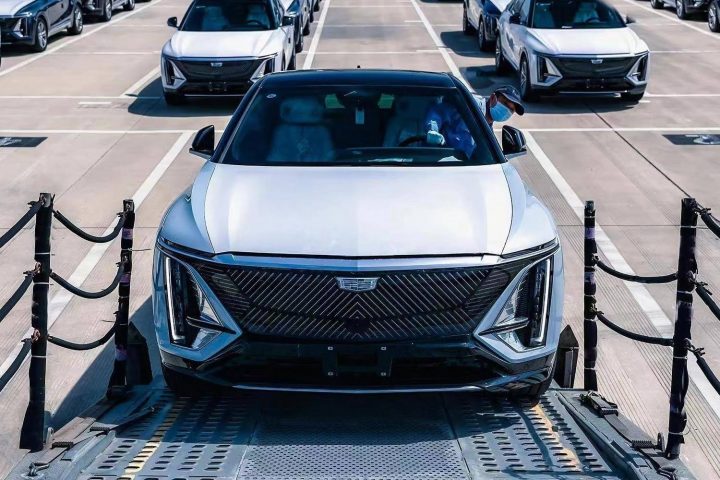
GM has released revised guidance in the wake of the new tariffs, acknowledging that the taxes could cost between $4 billion and $5 billion. President Trump is also expected to soften automaker tariffs going forward. General Motors says it has a strategy to mitigate a third of the Trump tariff impact. The Trump administration has also suspended the DOT’s EV infrastructure efforts, as well as eliminate Biden-era emissions rules. Additionally, the federal EV tax credit has come to an end. Nevertheless, GM has set an EV wholesale target for the year.
In May 2025, GM announced a recall on its full-size pickup trucks and SUVs equipped with the 6.2L V8 L87 engine due to connecting rod and crankshaft failures. The automaker estimates that more than 21,000 engines will need to be replaced, and those that don’t will get extended warranty coverage. GM is also facing a massive class action lawsuit over the alleged defects in the L87 engine.

GM Stock Value Micro Factors
In legal news, GM is facing allegations that the automaker broke privacy laws by selling driver data to data brokers, which in turn sold that data to insurance companies. More than 25 new class action lawsuits have been filed against GM over the automaker’s data collection practices.
In January of 2025, GM stock opened at $53.32, but fell to $46.50 by the start of February. GM stock value later hovered just under $50 per share in March before dropping to roughly $47 per share in April, $46 per share in May, and $49 per share in June. In July, GM stock value opened at $48.82 on July 1st, while in August, GM stock value opened at $52.15 per share. In September, GM stock opened under $60 per share at $57.54, rising to $60.94 in October. In November, GM stock value has increased to roughly $70 per share, exceeding $70 per share in December. In January of 2026, GM stock was over $80 per share, but has dropped significantly since then, kicking off April at $75.20 per share.
General Motors 2026 Stock Value YTD
| Month | Opening Value |
|---|---|
| January 2nd | $81.41 |
| February 2nd | $84.25 |
| March 2nd | $77.36 |
| April 1st | $75.20 |