The first electric C-Class has a WLTP range of 473 miles (762 kilometers).
It has all-wheel drive and dual motors that produce 482 hp and 590 lb-ft (800 Nm) of torque.
The C-Class EV gets optional predictive air suspension and rear-wheel steering.
A single-engine, wider-range rear-wheel-drive version will follow in 2027.
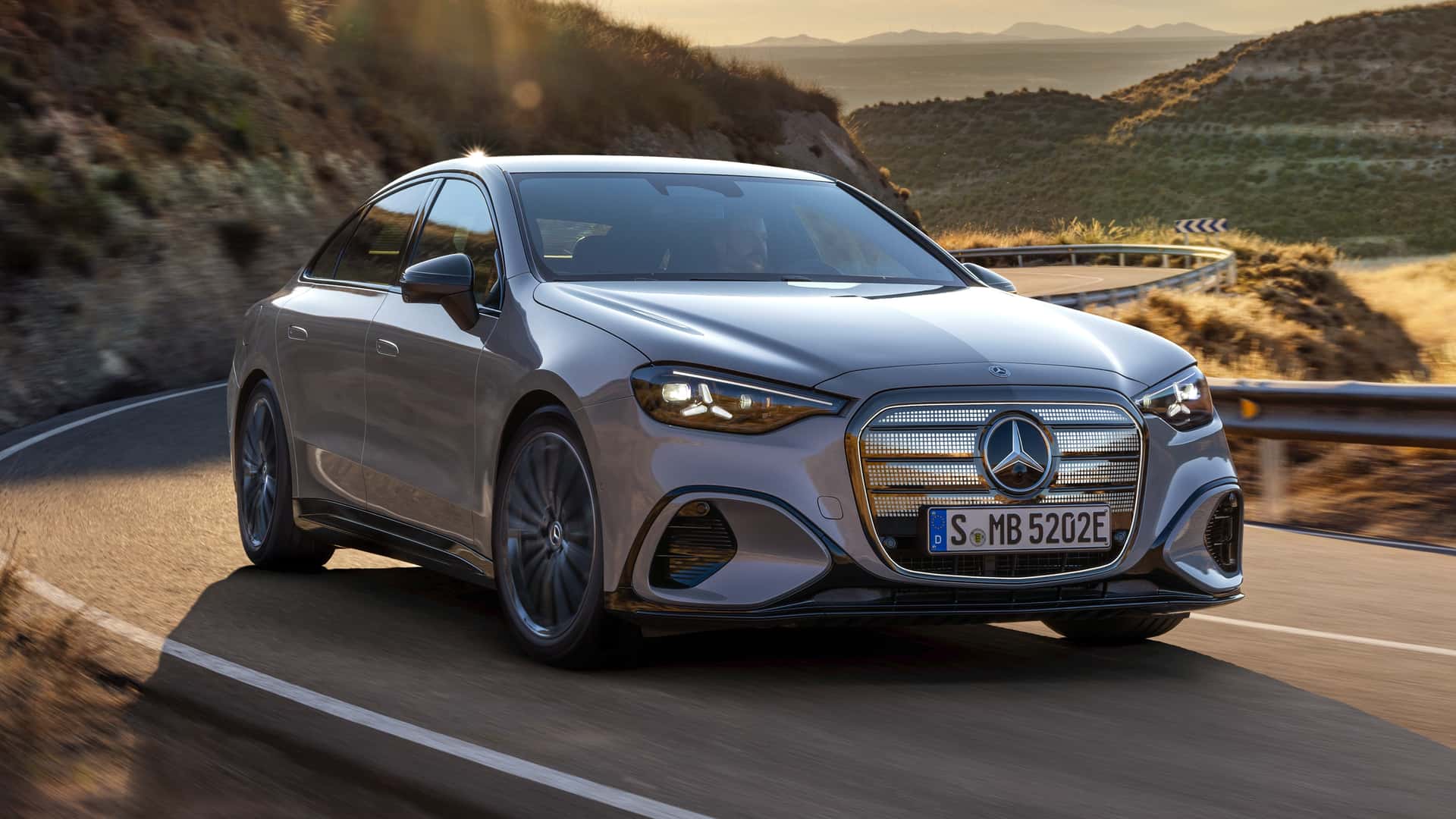
Mercedes is delivering on its promise to combine combustion and electric engines into one cohesive product lineup. Instead of the EQC Sedan, as it used to be called in the old naming scheme, the BMW i3 rival from Stuttgart is called the C-Class Electric. There is no mention of “EQ” in any of the press materials, and, as is obvious, the rounded shape of the EQ-branded models is gone.
In significant contrast to the combustion-powered C-Class, this electric sedan features a vintage-style grille with a modern touch. It pays homage to legendary models such as the W111 and W108, featuring the impressive front end first seen on the electric GLC and Vision Iconic concepts. It stands out even at night thanks to the optional 1,050 illuminated pixels, something that wouldn’t look out of place on a Hyundai Ioniq model.
The star motif on the front and rear lights makes it clear that this is a Mercedes, and there are an additional 162 luminous stars embedded in the panoramic glass roof. Overall, the design is exactly what you’d expect: essentially a sedan version of the electric GLC, without the controversial styling of the larger EQE and EQS sedans and SUVs.
2027 Mercedes C-Class Electric Interior
Photo by: Mercedes-Benz
Inside, the cabin is immediately familiar, as much of it is inherited from its SUV sibling. That means there’s a 39.1-inch continuous display that stretches across almost the entire dashboard. The so-called Hyperscreen tops the range, while lower models make do with three separate screens housed under a single glass panel.
The electric C-Class equipped with the optional Superscreen combines a 10.3-inch digital instrument cluster with dual 14-inch touchscreens. Choose the base setting, and you still get the same central driver and infotainment display, but the passenger-side screen is replaced by a “digital animated trim panel” rather than a true touchscreen. In other words, it’s basically a digital photo frame.
Off-screen, this is the most spacious C-Class ever. The car uses a dedicated EV platform, allowing Mercedes to extend the wheelbase by 3.8 inches (97 millimeters) compared to the petrol model. The axle clearance now measures 116.6 inches (2,962 millimeters), increasing legroom, especially for the driver and front passenger. The standard panoramic glass roof also increases headroom for all passengers. If you want the bright star pattern mentioned earlier, you should choose a panoramic roof with dimmable glass sections.
Front trunk of Mercedes C-Class Electric 2027
Photo by: Mercedes-Benz
Rear trunk of Mercedes C-Class Electric 2027
Photo by: Mercedes-Benz
Although the combustion engine is usually housed under the hood, the EV architecture provides room for a sizable front trunk with a capacity of 3.5 cubic feet (101 liters). In the back, the trunk offers 16.6 cubic feet (470 liters) of capacity. If you need to haul more, Mercedes rates the maximum towing capacity at 3,968 pounds (1,800 kilograms).
Like the electric GLC, Mercedes launched its range with the C400 4Matic variant. The car is equipped with dual motors that produce 482 horsepower and 590 pound-feet (800 Newton-meters) of torque, paired with a lithium-ion battery pack that offers a net capacity of 94.5 kWh. The electric C-Class can travel up to 473 miles (762 kilometers) on a single charge in the WLTP cycle.
While that figure is well below the smaller CLA’s range of 492 miles (792 kilometers), it still marks a clear improvement over the GLC. The electric sedan can travel about 30 miles (49 kilometers) further than its crossover version, thanks in large part to its more aerodynamic shape. The C-Class has a drag coefficient of just 0.22, compared to the SUV’s 0.26.
When the battery is low, a 10-minute charge can add up to 202 miles (325 kilometers) of range, provided you use a station capable of providing the car’s maximum DC charging rate of 330 kW. To further reduce range concerns, Mercedes plans to introduce a rear-wheel-drive, single-motor version with a range of around 497 miles (800 kilometers) on a full charge.
Beyond the numbers, Mercedes describes it as “the sportiest C-Class ever.” The electric sedan can be equipped with rear-wheel steering (up to 4.5 degrees), reducing the turning circle to 36.7 feet (11.2 meters). At speeds below 43 mph (70 km/h), the rear wheels turn in the opposite direction to the front wheels. If you go faster, the rear wheels turn (up to 2.5 degrees) in the same direction as the front wheels to increase stability.
Performance is quick, with 0 to 60 mph (96 km/h) taking 3.9 seconds (or 4.1 seconds to 62 mph / 100 km/h). Top speed is electronically limited to 130 mph (209 km/h).
2027 Mercedes C-Class Electric Profile
Photo by: Mercedes-Benz
Rear of the 2027 Mercedes C-Class Electric
Photo by: Mercedes-Benz
We’re told the electric C-Class is “as smooth as an S-Class on long journeys.” The optional adaptive air suspension with predictive damping scans the road ahead using Google Maps data and cloud-based real-time input, preparing the suspension for impending imperfections. To ensure long-distance comfort comparable to the flagship, Mercedes includes noise-reducing laminated glass for the front windows, a quieter air conditioning system and additional sound insulation throughout the cabin.
For now, the model is offered exclusively as a sedan, although Mercedes already sells the electric CLA Shooting Brake. It remains to be seen whether the BMW i3 Touring’s direct competitor will follow suit. Meanwhile, the C400 4Matic sedan is scheduled to arrive at US dealerships in the first half of 2027.
Additional rear- and all-wheel-drive variants will follow next year, with availability depending on region.
60
Source: Mercedes-Benz
Motorcycle Pickup1: While sales of Mercedes electric vehicles have clearly not met expectations, this new wave of models could help turn things around. With polarizing EQ styling now in the rearview mirror and solid technical specifications, the German luxury brand has reason to believe demand for its electric vehicles will increase.
Even so, the all-screen interior layout will likely alienate some buyers. In addition, the BMW i3 sedan also replaces most of the conventional controls with a screen-dominated dashboard. This seems to be the direction many automakers are taking, although some have started to reintroduce it by reintroducing physical buttons and switches.